Sonographer Job Description Duties and Qualifications
See what a sonographer actually does daily, required certifications, pay ranges, and work settings. Browse real openings on Allied Healthcare Jobs.
A sonographer jobs description usually comes down to one sentence: a sonographer uses ultrasound equipment to capture images of organs, tissue, blood flow, or a developing baby so a physician can diagnose what is going on inside the body. Pay for the role often lands between $43 and $57 an hour for experienced techs in hospital and outpatient settings, and cardiac and vascular sonographers can push past that range with the right certifications. Demand is steady because every hospital, imaging center, and OB clinic needs these scans done daily, not occasionally.
The job covers more than running a probe over skin. Sonographers log patient history, adjust machine settings for each exam type, spot abnormal images in real time, and write up findings for the reading physician. Settings range from hospital radiology departments to outpatient imaging centers, OB/GYN offices, and cardiac labs, each with its own pace and equipment. The rest of what follows breaks down the daily duties, the skills employers expect, and the certifications that get a resume past the first screen.
Table of Contents
What Sonographers Do on a Normal Shift
Most sonographer shifts run eight to twelve hours and mix scheduled exams with urgent add-ons from the ER or OR. A tech might scan a gallbladder in the morning, check a fetal heartbeat before lunch, and image a carotid artery by afternoon. The pace depends on the department, but the core task stays the same: get a clear image, flag anything abnormal, and move to the next patient.
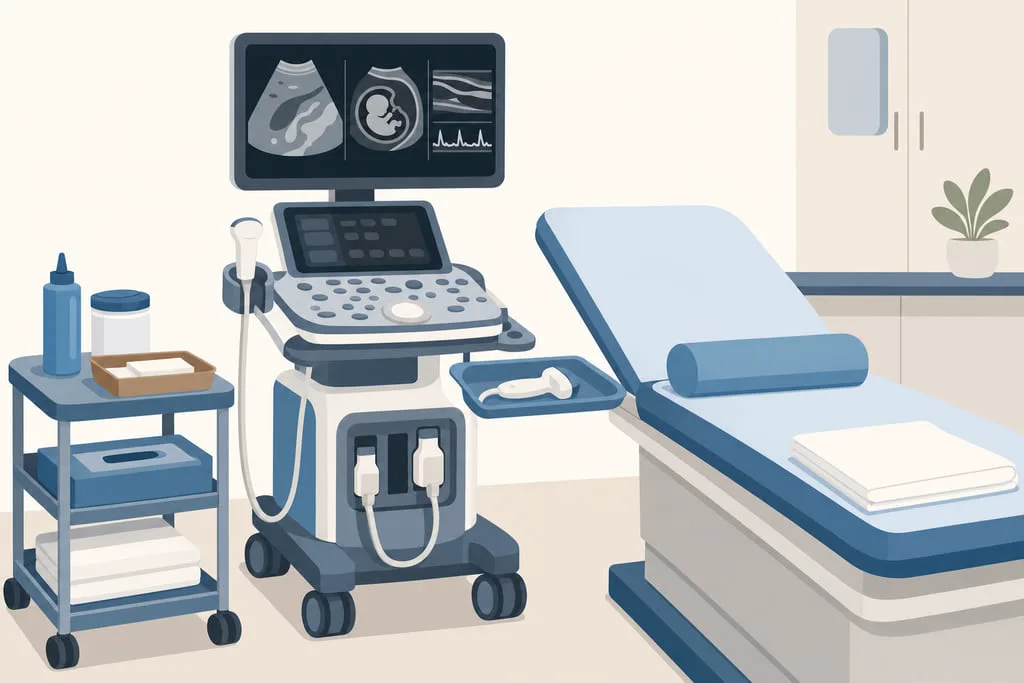
Sonography splits into specialties, and each one trains a tech to read a different part of the body. Abdominal sonographers scan organs like the liver and kidneys, cardiac sonographers (echo techs) focus on heart structure and blood flow, vascular sonographers track arteries and veins for clots or blockages, and OB/GYN sonographers handle pregnancy and pelvic exams. Many techs cross-train in two specialties to stay flexible for scheduling and pay.
| Specialty | Common certification | Typical work setting |
|---|---|---|
| Abdominal | RDMS | Hospital imaging department |
| Cardiac | RDCS | Cardiac lab, outpatient clinic |
| Vascular | RVT | Vascular lab, surgery center |
| OB/GYN | RDMS (OB/GYN) | OB/GYN office, maternal-fetal clinic |
Sonographers work alongside radiology and CT techs but run a different machine and a different workflow. Radiology and CT techs use X-ray and cross-sectional imaging that relies on radiation exposure limits and shielding protocols, while ultrasound uses sound waves and lets the sonographer adjust the image live during the scan. On a shared imaging floor, a patient might go from a CT scan to an ultrasound follow-up, so sonographers often coordinate directly with those techs on scheduling and findings.
Daily Duties You Can Expect on the Job
A sonographer's task list starts before the probe ever touches skin. Prepping a patient means confirming the order, reviewing allergies or prior scans, and explaining what the exam will feel like, since a transvaginal or transesophageal scan needs a different conversation than a standard abdominal one. Getting this part right cuts down on retakes and keeps the patient calm enough to hold still.
Once the exam starts, the tech operates the ultrasound unit to capture images from the angles a radiologist or cardiologist needs. This means adjusting depth, gain, and Doppler settings in real time, not just pressing a button and waiting. A sonographer has to judge, mid-scan, whether an image is diagnostic quality or needs another pass.
Before anything goes to the reading physician, the tech checks every image for clarity, correct measurements, and proper labeling. A single blurry or mislabeled image can send the whole study back, so this quality check is not optional. The shift wraps with documentation: patient history notes, exam findings, and machine upkeep like cleaning probes and logging maintenance.
- Confirm the order and patient identity before the exam starts
- Explain the procedure and position the patient correctly
- Capture and adjust images until they meet diagnostic standard
- Review every image for quality before sending it forward
- Document findings and log equipment maintenance
Skills That Separate Good Sonographers From Great Ones
Running the machine is the easy part to teach. What separates a strong sonographer from an average one is hand-eye coordination fine enough to hold a probe steady at the right angle while watching a screen, not the patient's skin. That spatial sense takes months to build and keeps improving for years.
The second skill is pattern recognition: knowing normal liver tissue from a mass, or a healthy heart valve from one with regurgitation, often in the first few seconds of a scan. Missing an abnormal finding in real time means it may never get flagged for the physician, since the sonographer is often the only person looking at the live image. Reading anatomy correctly, under time pressure, is the skill employers test hardest in interviews.
Soft skills matter just as much. A patient in pain or scared about a pregnancy scan needs a tech who can talk them through it without rushing. Add in the physical stamina to stand for a full shift and repeat the same wrist and shoulder motions scan after scan, and the job asks more of the body than people expect.
- Steady hand control for precise probe positioning
- Fast recognition of normal versus abnormal anatomy
- Clear, calm communication with anxious or in-pain patients
- Physical stamina for standing and repetitive motion all shift
Certifications You Need for a Sonographer Jobs Description
Most employers require an associate or bachelor's degree in diagnostic medical sonography from an accredited program before they will even review a resume. Programs typically run 18 months to two years for an associate track, longer for a bachelor's degree, and include supervised clinical hours.
After school, the next step is passing a credentialing exam through the American Registry for Diagnostic Medical Sonography (ARDMS) or Cardiovascular Credentialing International (CCI). These exams lead to specialty registries like RDMS for abdominal and OB/GYN work, RDCS for cardiac sonography, and RVT for vascular work, matching the specialties covered earlier. Employers almost always list one of these registries as a hard requirement, not a preference, so check the specific credential a posting asks for before applying.
On top of the registry, most hospitals and clinics also require current BLS certification, since sonographers work directly with patients who can have reactions during a scan. A few employers will sponsor training for entry-level hires who have a degree but not yet a registry, so that detail is worth confirming directly with the employer.
- Associate or bachelor's degree from an accredited sonography program
- Passing score on an ARDMS or CCI credentialing exam
- Specialty registry matching the role: RDMS, RDCS, or RVT
- Current BLS certification
Where Sonographers Work and What It Pays
Sonographers work in hospital radiology departments, outpatient imaging centers, OB/GYN offices, cardiac labs, and increasingly on mobile imaging units that travel to nursing homes or rural clinics. Each setting changes the pace and the patient mix, with hospitals handling more urgent, unscheduled scans and clinics running a steadier, appointment-based day.
Schedule type shifts the job just as much as setting does. Full-time hospital roles often come with rotating shifts and on-call hours for emergencies, while per diem roles offer more control over which shifts a tech picks up, usually at a higher hourly rate to offset the lack of guaranteed hours. On-call expectations are common in hospital settings and rare in outpatient clinics, so that distinction is worth asking about in an interview.
Pay still varies by specialty and setting, with cardiac and vascular sonographers often earning more than general abdominal techs due to the added registry. Checking listings on a board built for allied health roles makes it easier to compare pay, shift type, and on-call expectations side by side before applying.
- Hospital radiology departments, with rotating shifts and on-call hours
- Outpatient imaging centers and OB/GYN offices, mostly daytime hours
- Cardiac and vascular labs, often paying more for specialty registries
- Mobile imaging units serving nursing homes and rural clinics
One Registry or Three
A sonographer deciding on a career path now faces a real fork: stay general with one registry, or stack two or three to qualify for more postings. A single RDMS keeps you eligible for abdominal and OB/GYN roles, but it shuts you out of cardiac labs that require RDCS or vascular labs that require RVT. Stacking credentials costs you exam fees and study time now, but it opens up per diem and float pool postings that pay more per hour.
Postings themselves have gotten more specific about this choice. A listing that would have said "ultrasound tech wanted" five years ago now names the exact registry, the specialty, and sometimes a second credential as a plus. That shift means a general sonographer applying to a cardiac-only posting gets filtered out before a human ever reads the resume, so matching your credential to the listing's exact wording matters more than it used to.
Candidates who track pay and registry requirements across multiple listings end up applying to fewer jobs but hearing back more often. That means pulling the hourly range, the required registry, and the work setting from each posting before applying, rather than mass-applying and hoping one sticks.
- General registry only: broadest early eligibility, lowest ceiling on pay
- Two registries, such as RDMS plus RVT: qualifies for hospital and vascular lab postings
- Three registries, adding RDCS: opens cardiac float pool and per diem roles at the top of the pay range
Browsing verified listings built specifically for allied health roles makes this comparison faster, since pay, registry, and setting sit next to each other on every posting instead of buried in paragraph text the way general job boards often format them.
Picking Which Postings Are Worth Your Time
Pull up your exact credential, whether that's RDMS, RDCS, or RVT, and only click into postings that name it. A posting asking for RDCS won't move you forward with an RDMS alone, no matter how strong your resume reads, so skip it and save the application for a listing that matches. Once you find a match, check the hourly rate, the work setting, and whether the role carries on-call hours before you send anything in, since those three details decide whether the job actually fits your life outside the hospital. Allied Healthcare Jobs lists sonographer openings with pay, registry, and setting next to each other on every posting, which makes that check take a minute instead of an afternoon. Start there, filter to your registry, and apply to the postings that already want what you have.
Common Sonographer Career Questions
Can a radiology tech switch to sonography without starting school over?
No, radiology training does not substitute for a sonography degree, but it does shorten the path. Most accredited sonography programs accept prior clinical hours or prerequisite coursework from a radiology tech background, cutting the program down from the usual 18 to 24 months in some cases. Check with the specific program, since credit transfer decisions sit with the school, not an employer.
How physically demanding is sonography on your body long term?
Sonography is hard on the shoulder, wrist, and neck over a full career, more than most people expect going in. Repetitive scanning motion, held at odd angles for minutes at a time, leads many techs to develop tendinitis or shoulder strain after several years on the job. Techs who last long term often rotate specialties, use ergonomic probe grips, and take short breaks between scans to reset posture.
Do sonographers need to be recertified regularly to keep working?
Yes, ARDMS and CCI registries require continuing medical education credits and periodic renewal to stay active. Letting a registry lapse means an employer can no longer count that credential toward a posting's requirement, even if the original exam score never expires. Renewal timelines come from ARDMS or CCI directly, so a tech should confirm their own deadline through the registry portal rather than guessing.
Is travel sonography a realistic option for someone new to the field?
Travel contracts are possible for new sonographers, but most staffing agencies and hospitals prefer at least one to two years of hands-on scanning experience first. A new grad without that track record often struggles to land a contract, since travel roles expect a tech to work independently from day one with little onboarding. Building experience in a staff role first, then browsing travel-labeled listings on a board like Allied Healthcare Jobs, is the more common route into travel work.