Diagnostic Services Careers Roles Training and Job Outlook
Explore careers in diagnostic services: roles, training paths, certifications, pay, and job outlook for techs and therapists.
By David Nix
Published
Careers in diagnostic services run almost every test and scan a doctor uses to figure out what is wrong, and by 2033 the country will need roughly 877,500 more workers just to keep up with imaging, lab, and cardiac testing demand. These jobs cover radiology and ultrasound techs who capture images, lab and phlebotomy staff who draw and process samples, respiratory therapists who test lung function, and cardiac sonographers who scan the heart. None of them treat the patient. A surgeon, physician, or nurse practitioner reads the scan or the bloodwork and decides what happens next, but the diagnostic tech is the one who produced the information that made the decision possible.
Older patients need more scans and bloodwork, and that is the main reason hiring in this field keeps climbing. People over 65 get CT scans, echocardiograms, and lab panels far more often than younger patients, and the US population in that age group is growing by about 10,000 people a day as Baby Boomers age. Hospitals, outpatient imaging centers, and independent labs are all adding shifts to handle the volume, which is part of why pay for roles like CT tech and respiratory therapist now regularly lands between $43 and $57 an hour in postings across the country. A medical assistant or phlebotomist with a few years of clinical experience is often a strong candidate for cross-training into one of these diagnostic roles, since the patient handling and lab exposure already overlap.
Table of Contents
What Counts as a Diagnostic Services Role
Diagnostic services covers four main branches: imaging, lab testing, cardiac monitoring, and respiratory diagnostics. Imaging includes radiology, CT, MRI, and ultrasound techs who produce pictures of bone, tissue, and organs. Lab testing covers phlebotomists and lab techs who draw and run blood, urine, and tissue samples.
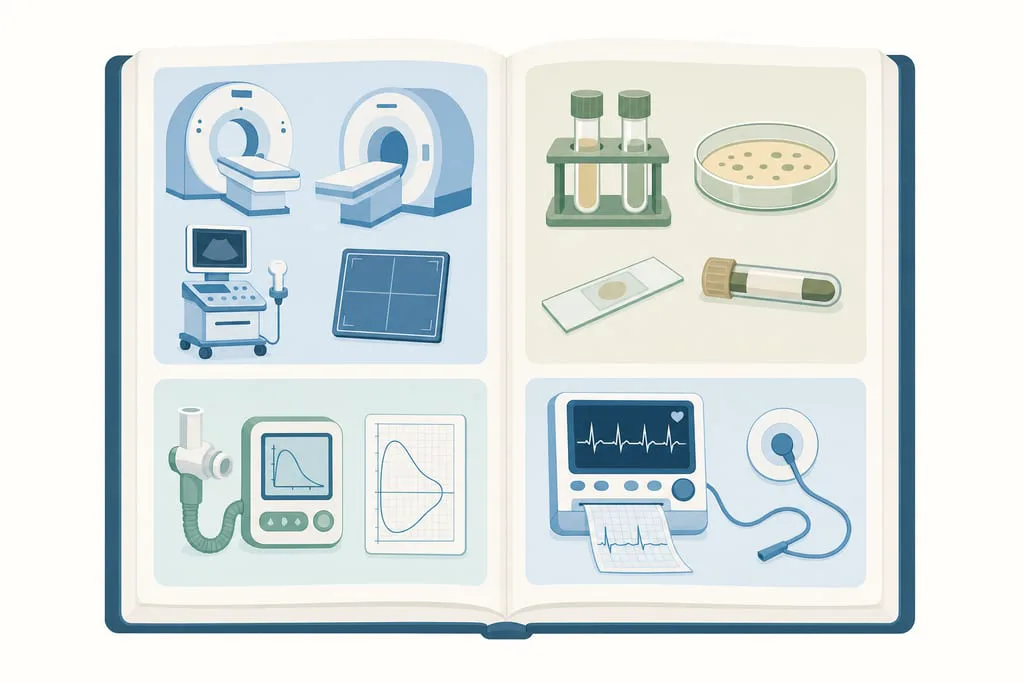
Respiratory diagnostics and cardiac monitoring round out the field. Respiratory therapists test and measure lung function, while cardiac sonographers and EKG techs record how the heart moves and beats. None of these roles decide treatment, which is what separates them from nursing or direct patient therapy jobs where the worker administers care based on a diagnosis someone else already made.
| Role | Main Setting | Typical Credential |
|---|---|---|
| Radiology Tech | Hospital, imaging center | ARRT |
| Phlebotomist | Lab, clinic, plasma center | State phlebotomy cert |
| Respiratory Therapist | Hospital, ICU, home care | RRT |
| Cardiac Sonographer | Hospital, cardiology clinic | RDCS |
| Lab Tech | Hospital lab, independent lab | ASCP certification |
Imaging and Scanning Roles You Can Train For
Radiology techs, CT techs, and sonographers each produce a different kind of image, but the training path looks similar across all three. Radiology techs capture standard x-rays of bone and chest. CT and MRI techs run cross-sectional scans that show layers of tissue, and sonographers use sound waves instead of radiation to image organs, blood flow, or a developing fetus.
Most imaging roles ask for an associate degree from an accredited program, plus a credential from the American Registry of Radiologic Technologists (ARRT) or the American Registry for Diagnostic Medical Sonography (ARDMS). Mammography techs need the same ARRT base plus an added mammography certification. Daily work is hands-on: positioning the patient correctly, running the equipment, and following radiation safety rules that protect both the patient and the tech.
- Radiology tech: x-rays of bone and chest, ARRT credential
- CT tech: cross-sectional scans, ARRT with CT add-on
- MRI tech: magnetic imaging, ARRT with MRI add-on
- Sonographer: ultrasound imaging, ARDMS credential
- Mammography tech: breast imaging, ARRT plus mammography cert
Postings for CT techs regularly list pay between $43 and $57 an hour, and that range holds whether the job is in a hospital or a standalone imaging center.
Lab and Specimen Testing Roles
Phlebotomists draw blood and lab techs run the tests on it, and both roles have a clear entry point that does not require a four-year degree. A phlebotomy certificate program usually runs a few months, and graduates then sit for a national exam such as the Certified Phlebotomy Technician (CPT) credential.
Lab techs work one level up from the draw. They run chemistry, hematology, and microbiology tests on blood, urine, and tissue samples, and most hold a Medical Laboratory Technician (MLT) or Medical Laboratory Scientist (MLS) credential tied to an associate or bachelor's degree. Some employers post trainee openings that sponsor phlebotomy training for new hires with no clinical background, which is worth checking before ruling out a listing because it lists "no experience."
- Phlebotomist: blood draws, CPT certification, short training window
- Lab tech (MLT): routine lab testing, associate degree plus cert
- Lab scientist (MLS): complex testing, bachelor's degree plus cert
- Trainee roles: employer-paid phlebotomy training, no prior cert needed
A posting that offers employer-sponsored training is often the fastest way into the field for someone with no clinical certification yet, and it is worth reading the full listing for that detail rather than skipping past entry-level tags.
Cardiac and Respiratory Diagnostic Roles
Cardiac sonographers scan the heart to produce echocardiograms, and the job calls for an ARDMS or Cardiovascular Credentialing International (CCI) registry credential on top of a sonography degree. Respiratory therapists test how well a patient's lungs move air, and most states require an associate degree plus the Registered Respiratory Therapist (RRT) credential before a hospital will hire into the role.
Both roles show up often in hospital float pools, which means the tech moves between units based on where coverage is needed that shift. Float pool postings tend to list per diem pay and on-call expectations rather than a fixed Monday-to-Friday schedule.
- Echocardiogram: cardiac sonographer, ARDMS or CCI credential
- EKG reading: cardiac monitor tech, shorter certificate path
- Lung function test: respiratory therapist, RRT credential
- Float pool shift: per diem pay, on-call rotation
A respiratory therapist in a float pool role can expect pay near $55 an hour on a per diem basis, and the trade-off for that rate is a schedule that changes week to week instead of staying fixed.
Diagnostic Services Pay Ranges and Demand by Role
Imaging and sonography roles pay more per hour than entry-level lab or phlebotomy jobs, and that gap comes down to the added credentialing years each role requires. A CT tech or respiratory therapist posting in the $43 to $57 an hour range sits well above a phlebotomist's typical starting pay, which more often lands in the $18 to $24 an hour range before shift differentials.
The Bureau of Labor Statistics projects faster-than-average job growth for sonographers and radiologic techs through the rest of the decade, driven by the same aging-population demand that is pushing scan and test volume up across the country. Rural hospitals and travel contract postings often pay a premium over a fixed staff position at a city hospital, because they are harder to staff and the facility is covering for a shortage rather than a steady opening.
| Role | Typical Pay | Growth Outlook |
|---|---|---|
| CT Technologist | $43-$57/hr | Faster than average |
| Phlebotomist | $18-$24/hr | Average |
| Respiratory Therapist | $50-$60/hr | Faster than average |
| Cardiac Sonographer | $45-$58/hr | Much faster than average |
A tech weighing a rural or travel contract against a fixed hospital job should compare the hourly premium against housing stipends and contract length, since a shorter 13-week travel contract can pay more per hour but offers none of the benefits counts listed on a full-time posting.
Picking Between Fast Entry and Longer Specialty Training
Phlebotomy and trainee lab roles get you a paycheck in a few months, but that speed caps how high the hourly rate climbs later. Imaging and sonography take an associate degree and a registry exam, usually two years, but they open the door to CT, MRI, or cardiac specialties where travel contracts and shift differentials push pay well past entry-level lab work.
The real choice is what you trade for speed. A phlebotomy certificate gets you working in months and into a clinic, lab, or plasma center, but the ceiling sits in that $18 to $24 an hour starting range unless you later stack on an MLT or MLS credential. An imaging or respiratory path costs more time up front, but it's what makes float pool and travel contract pay possible once you're credentialed.
| Path | Time to Start Working | Physical Demand | Schedule Pattern |
|---|---|---|---|
| Phlebotomy | Few months | Standing, repetitive draws | Fixed clinic hours |
| Imaging/Sonography | ~2 years | Lifting, positioning patients | Hospital shifts, some on-call |
| Respiratory Therapy | ~2 years | ICU pace, physical exertion | Float pool, per diem, rotating |
Before applying to anything, check the listing for the exact credential it wants, such as ARRT, RRT, or a state phlebotomy cert, along with BLS status. A posting that looks entry-level sometimes needs a certification you don't have yet, and skipping that check wastes an application that a quick read would have ruled out.
Match Your Credential to What's Hiring Today
Pull up your current credential, whether that's a phlebotomy cert, an ARRT registration, or an RRT, and search only for roles that list it by name. A generic job board search for "healthcare jobs" buries a CT tech opening under hundreds of nursing and admin posts, which wastes the time you'd spend checking BLS status and shift type on listings you can't actually take. Searching by role and certification instead of by keyword cuts that noise out from the start. Allied Healthcare Jobs sorts openings by role, so a phlebotomist sees phlebotomy work and a cardiac sonographer sees sonography work, not a mixed feed of jobs outside the field. Start there, filter by your credential, and apply to what you're already qualified for today.
Diagnostic Services Career Questions
Can you switch from x-ray into CT or MRI without going back to school?
Yes, most x-ray techs move into CT or MRI by adding a short post-primary certification instead of starting over. Since you already hold ARRT registration from your radiology training, the CT or MRI add-on usually means a few months of coursework plus a specialty exam, not a new associate degree. Hospitals often help cover that cost because it fills a scan slot they already need staffed.
Do diagnostic techs face more radiation or infection exposure than other allied health jobs?
Radiology and CT techs do carry radiation exposure that phlebotomists and respiratory therapists don't, but lead shielding, dosimeter badges, and distance protocols keep that exposure within limits set by each state's radiation safety office. Phlebotomists and lab techs face more bloodborne pathogen exposure instead, which is why BLS certification and standard precautions training come up on almost every posting in that branch.
Can you work diagnostic services jobs part time or weekends only?
Yes, part-time and weekend-only shifts exist, especially in outpatient imaging centers and plasma centers that run extended hours to handle walk-in volume. Hospital float pool positions, the same ones that pay per diem rates for respiratory therapists and cardiac sonographers, often let you pick up shifts around a school schedule instead of committing to a fixed 40-hour week.
What if a hospital wants a credential your training program never covered?
Call the hospital's HR or imaging department and ask whether they'll sponsor the missing credential, since many do when the rest of your background fits the role. If they won't, Allied Healthcare Jobs listings usually spell out the exact certification needed in the posting itself, so you can rule out a mismatch before applying and spend that time on a listing that matches what you already hold.