Radiology Tech Career Path From School to Specialties
See the radiology tech career path from school to ARRT certification, specialties like CT and MRI, and pay jumps at each step.
By David Nix
Published

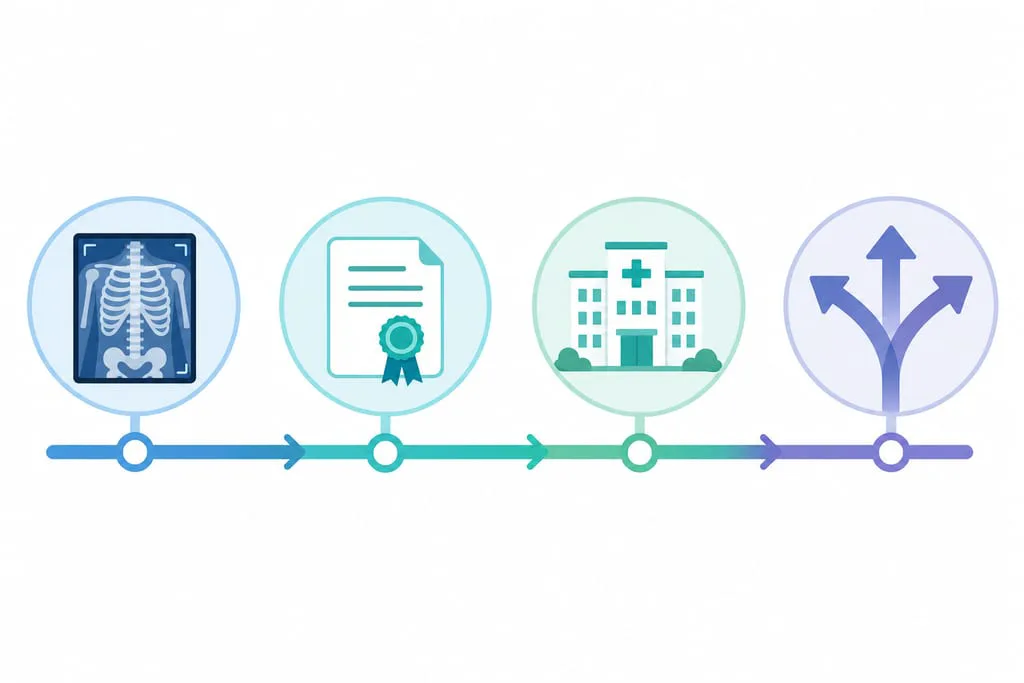
The radiology tech career path runs through four fixed steps: an accredited radiography program, the ARRT certification exam, a staff tech job, then a specialty credential if you want one. You start earning the day you pass boards, not years later after more schooling. Most programs take 18 to 24 months, and the ARRT exam is the one gate everyone has to clear before they can touch a machine as a licensed tech.
Staff tech pay covers general x-ray, but the real jumps show up once you add a specialty. CT, MRI, and mammography techs routinely out-earn general rad techs by several dollars an hour, and some employers will pay for that extra training once you're already on staff. A rad tech with an ARRT credential and a few years of general experience is already in a strong spot to pick a lane and move into it without starting over.
Table of Contents
What a Radiology Tech Actually Needs Going In
Accredited associate degree programs in radiography typically run 20 to 24 months, covering anatomy, positioning, patient care, and clinical rotations in a hospital or imaging center. Some schools offer a certificate track that runs shorter, but most employers hire out of the accredited associate route because it lines up with ARRT exam eligibility.
ARRT certification is what employers ask for by name on nearly every job posting for this role. Passing the exam requires graduating from a JRCERT-accredited program first, so the degree and the credential are two separate steps that happen in sequence, not in parallel.
State licensure stacks on top of ARRT and the rules are not the same everywhere. Some states issue their own license once you pass ARRT, others require a separate state exam, and a few have no state licensure board at all and rely on ARRT alone.
- Accredited program: 20 to 24 months, classroom plus clinical hours
- ARRT exam: national credential, required by nearly all employers
- State license: issued by the state board, rules set at the state level
- Clinical hours: completed during the program, tracked by the school
Check your state's radiologic technology board directly before you assume ARRT alone gets you working. That one call settles the question for good, since the board, not the school, decides what counts.
Picking a Program That Gets You to the Registry
Your first real decision is which degree track to enroll in, and the choice shapes how fast you get hired. JRCERT accreditation is non-negotiable because it is the only way to qualify for the ARRT exam, so confirm a program's accreditation status before you pay a dime in tuition.
Associate degrees remain the most common entry point into the field, and bachelor's degrees exist mainly for techs who want management or education roles down the road. A bachelor's does not speed up your first staff job offer, it opens doors years later.
- Certificate programs: fastest route, limited to students with prior healthcare coursework
- Associate degree: standard path, accepted by nearly every hospital and clinic
- Bachelor's degree: same clinical core, adds coursework useful for supervisor tracks
Clinical rotation hours matter as much as your GPA. Programs that place students in busy hospital imaging departments, not just outpatient clinics, tend to produce grads who get job offers before graduation because supervisors already know their work.
Passing Boards and Landing Your First Staff Role
The ARRT exam tests three domains: safety, image production, and patient care, and you need a passing score in all three to get certified. Most new grads sit for the exam within a few weeks of finishing clinicals, while the material is still fresh.
Almost every new grad starts in general diagnostic radiography, working in a hospital emergency department or an outpatient clinic rather than jumping straight into a specialty. First-year pay typically runs $25 to $35 an hour, with the higher end going to hospitals that require night or weekend rotation.
- Apply to hospital systems before small clinics, they usually hire more new grads
- Expect rotating shifts your first year, including some weekend coverage
- Ask about call pay during interviews, it varies a lot between employers
- Use a site built for allied health roles so general x-ray postings aren't buried under nursing listings
Night shift and swing shift differentials can add several dollars an hour on top of base pay, which matters when you're comparing two otherwise similar offers.
Specialty Credentials That Change Your Paycheck
CT and MRI are the two specialties most general rad techs pursue first, usually after a year or two on staff. Both require additional ARRT registry exams, and many hospitals will pay for the training once you've proven yourself in general diagnostic work.
Mammography takes a different route. It requires its own ARRT exam plus a set number of supervised clinical mammograms, so it takes longer to add than CT or MRI but opens outpatient and women's health positions with steadier daytime hours.
| Specialty | Added requirement | Typical pay bump |
|---|---|---|
| CT | ARRT CT exam | $3-6/hr over staff rate |
| MRI | ARRT MRI exam | $4-7/hr over staff rate |
| Mammography | Supervised exam count plus ARRT exam | $2-4/hr over staff rate |
| Interventional radiology | Cath lab or IR-specific training | $6-10/hr over staff rate |
Interventional radiology and cardiac cath lab techs sit at the top of that pay scale, but the job comes with regular on-call hours, including nights and weekends, so weigh the extra pay against the lifestyle trade before you commit to that track.
Moving Into Lead, Travel, or Management Roles
Lead tech and modality supervisor openings usually ask for two to three years of specialty experience before they'll consider you. These roles add scheduling and quality control duties on top of your regular imaging workload, and they're the most common next step for techs who want more responsibility without leaving the department.
Travel radiology contracts take a different path entirely, trading stability for pay. Travel assignments often pay 20 to 40% more than a comparable staff position, with housing stipends on top, which is why many techs run one or two travel contracts before settling into a permanent role.
- Lead tech or modality supervisor: requires specialty experience, adds scheduling duties
- Travel contracts: higher pay, 8-13 week assignments, no long-term benefits
- Department management: usually requires a bachelor's or master's in healthcare administration
Department management positions sit furthest from the imaging table. Most hospitals require a bachelor's degree at minimum, and many prefer a master's in healthcare administration for director-level roles overseeing an entire imaging department.
Choosing Your Lane Without Guessing Wrong
General radiography gets you hired fastest, but it's also the slowest-growing paycheck. If you want the widest range of job openings right away and don't mind years of flat pay before a raise, stay general. If you want your hourly rate to keep climbing, you need a specialty, and the sooner you pick one, the sooner it pays off.
Metro imaging departments post CT and MRI openings more often than entry-level radiography slots in a lot of markets, because hospitals already have enough staff techs and need the specialty coverage. That changes the math on timing. Instead of waiting two or three years on staff before adding a credential, some techs start cross-training within their first year once a supervisor sees they're reliable.
Travel and per diem contracts let you test a specialty before you commit to the extra exam and clinical hours. A per diem CT shift at a second hospital tells you if you like the pace before you sink months into supervised exams for a credential you might not want long term. That costs you some schedule stability up front, but it saves you from chasing a specialty credential you end up not using.
- General radiography: widest hiring pool, slowest pay growth, lowest barrier to entry
- CT or MRI: faster specialty pay bump, requires an added ARRT exam, often employer-funded
- Travel or per diem: lets you sample a specialty, trades benefits and stability for a test run
Pick the Credential You're Adding Next
Before you enroll in anything, look at your own local job board and count how many CT, MRI, or mammography postings show up compared to general radiography slots. Whichever specialty has steady local demand is the one worth chasing first, not whichever sounds most interesting. Check the pay range and certification line on each listing before you commit to the extra exam hours, since employers list that detail up front on most postings. Allied Healthcare Jobs lets you filter radiology openings by certification and pay side by side, so you can compare CT and MRI rates in your area before signing up for either exam. Pick the one with openings near you, confirm the pay bump matches what you'd give up in training time, then apply.
Switching Specialties Mid-Career
Can I train for CT or MRI while still working full-time as a general tech?
Yes, most hospitals schedule specialty clinical hours around your existing shifts instead of pulling you off the floor. You stay on staff pay during training and add the registry exam once your supervised hours are done. Ask your modality supervisor how other techs in your department structured their rotation before you request the swap.
Will switching specialties mean starting over on seniority or pay?
No, seniority is tied to your hire date and hospital tenure, not your modality. Your base staff rate carries over, and the specialty pay bump gets added on top once you're certified. The only pay reset happens if you leave for a different employer entirely, since a new hospital sets its own starting rate.
What if my employer wants me cross-trained in a specialty I'm not certified in yet?
Ask whether the hospital will sponsor the ARRT exam and supervised hours before you agree to the cross-training. Many employers cover the cost because it's cheaper than hiring a new specialty tech, but get the training timeline and who pays for it in writing first. If they won't put it in writing, that tells you how firm the offer really is.
Can work experience replace formal specialty training?
No, ARRT requires a passing exam score plus a set number of supervised clinical exams for every specialty, regardless of how many years you've worked general radiography. Experience helps you qualify for the supervised hours faster and makes the material easier to learn, but it doesn't skip the exam. Checking current openings on a site like Allied Healthcare Jobs shows you which specialty credential local employers actually ask for before you sign up for the exam.