How to Become a Medical Assistant in Florida
Learn the Florida-specific steps to become a medical assistant, from training to certification to landing your first clinic job.
By David Nix
Published
If you want to know how to become a medical assistant in Florida, start here: Florida does not require a state license to work as a medical assistant. There is no Florida MA board, no state exam, and no mandatory state certificate you must hold before you can take a job. That surprises a lot of people coming from fields like radiology or respiratory therapy, where state licenses are the norm.
Skipping a state license does not mean skipping standards. Florida employers set their own bar, and most hospitals, clinics, and physician offices want a completed training program, a national certification like CMA or RMA, and current BLS before they will hire you. Some will train you on the job if you are willing to earn certification within a set window. Your actual path runs through four things: training, BLS, certification, and matching yourself to the jobs that fit your current credentials.
Table of Contents
Why Florida's Rules Work Differently
Florida treats medical assisting as a delegated task, not a licensed profession. A physician decides what duties an MA can perform in their office, within limits set by Florida Statute 458.3485, and that delegation can shift from one practice to the next.
This means your scope of practice depends on the doctor you work for, not a state-issued license card. A dermatology office might have you assist with minor procedures, while a primary care clinic limits you to vitals, injections, and intake.
Since there's no state board checking credentials, employers lean on national certification to confirm you know the material. CMA, RMA, and similar credentials act as the proof that a license would provide in other states, which is why most job postings list them as a requirement even though Florida law does not.
| Item | Florida requirement | Typical employer expectation |
|---|---|---|
| State license | None | Not asked for |
| National certification (CMA/RMA) | Not required by law | Required or strongly preferred |
| Scope of practice | Set by physician delegation | Defined in writing by the hiring office |
| BLS certification | Not required by law | Required before start date |
Picking a Training Path That Fits Your Timeline
Your training choice sets your timeline and your student loan bill, so pick based on how fast you need to work and what you can afford. Certificate programs at Florida technical colleges run 9 to 12 months and focus on clinical skills like vitals, injections, and EKGs. Associate degree programs take about two years but open doors to admin-heavy roles, supervisory positions, and higher starting pay in some offices.
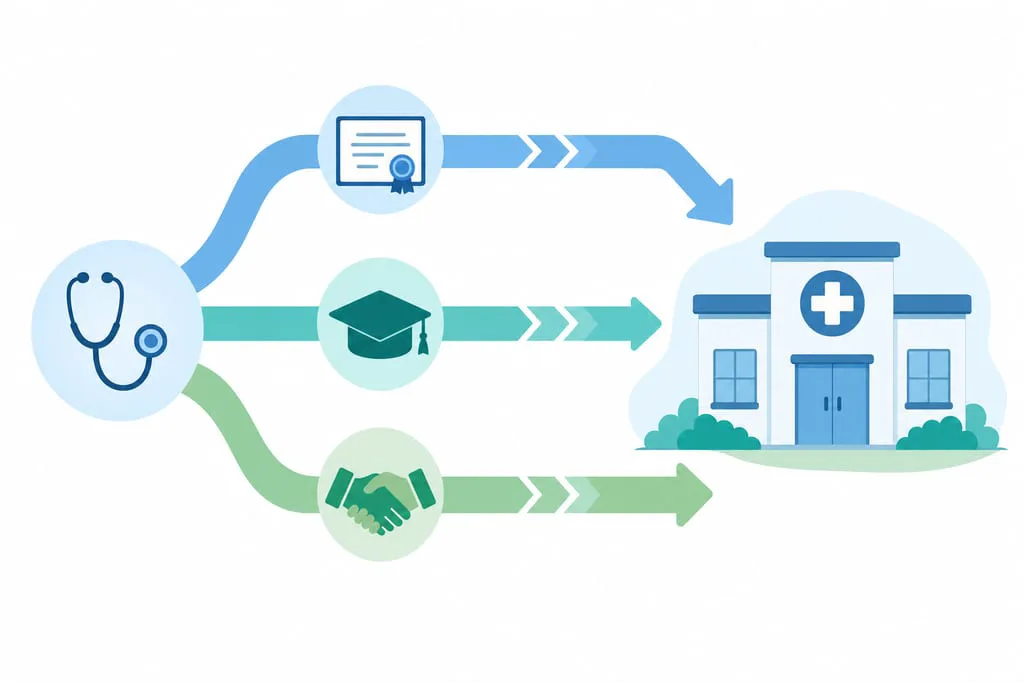
Some Florida hospital systems and larger clinic groups offer paid on-the-job training instead of classroom tuition. You work as a trainee or clinical assistant while studying for a national exam on the side, which skips tuition debt but usually pays less during the training period. Whichever route you pick, check that the program holds CAAHEP or ABHES accreditation, since that accreditation is what makes you eligible to sit for the CMA exam through AAMA.
| Path | Length | Typical Cost |
|---|---|---|
| Technical college certificate | 9-12 months | $3,000-$8,000 |
| Associate degree | About 2 years | $8,000-$20,000 |
| Employer-sponsored training | Varies by employer | Little to no tuition cost |
Getting Certified Without Overpaying for It
Certification costs money and time, so spend it on the credential that actually matches your training path. CMA through AAMA requires graduation from a CAAHEP or ABHES accredited program, no exceptions. RMA through AMT gives you more routes in, including work experience without a formal program, which helps if you trained on the job instead of in a classroom.
Florida job postings list CMA or RMA as preferred far more often than required, so a strong resume without certification can still land interviews, especially for entry-level or trainee roles. One requirement shows up almost everywhere regardless of which certification path you choose: a current BLS/CPR card, since nearly every employer wants that before your first shift.
- CMA fits graduates of accredited certificate or degree programs
- RMA fits candidates with qualifying work experience instead of a program
- Both require passing a national exam, not a Florida state exam
- BLS/CPR renewal every two years, separate from either certification
Building a Resume Florida Clinics Actually Call Back
Florida clinics hire on more than a certification line, so your resume needs to show real clinical hands-on time. Clinical externship hours from your training program carry weight with hiring managers even if you have not sat for a certification exam yet. Bilingual Spanish-English skills are a strong selling point in markets like Miami and Tampa, where front desk and intake staff need to talk to patients in both languages daily.
Familiarity with EHR systems such as Athenahealth or Epic helps you clear interviews faster, since most offices expect you to learn their charting system with little hand-holding. Demand also shifts by market: Miami and Orlando post heavy volume for bilingual MAs, while Jacksonville and Tampa clinics often weight EHR experience more heavily in screening.
- List externship hours and the clinical setting, not just the school name
- Name the EHR systems you used during training or a prior job
- Note bilingual ability directly under your name or contact info
- Match your resume's listed skills to the specific job posting's language
Finding the Right Florida Job Opening
Finding the right opening means comparing real listing details, not just job titles. Search by city or ZIP to compare pay across Miami, Tampa, Orlando, and Jacksonville, since hourly rates for MAs can differ by several dollars between these markets. Check each listing for its certification requirement, BLS expectation, and whether the employer sponsors training if you are not yet certified.
Work setting matters just as much as pay. A clinic job, a hospital floor role, a surgery center position, and a mobile phlebotomy route all come with different schedules, patient volumes, and physical demands, so read the setting line before you apply. South Florida programs can help you confirm what local employers expect before you commit to a track. Allied Healthcare Jobs filters out nursing and physician postings, so MA openings do not get buried the way they can on bigger job boards.
- Compare hourly pay ranges across at least two Florida cities before applying
- Confirm BLS and certification requirements listed on the posting
- Note the work setting: clinic, hospital, surgery center, or mobile
- Check whether the employer offers sponsored training for uncertified applicants
Certified or Uncertified, Which Path Gets You Hired
No license requirement means more people without formal training apply for the same MA jobs you want. That raises the number of applicants per posting, especially for entry-level clinic roles in Miami and Orlando where demand is high. Your certification and clinical hours are what separate you from that larger pool.
Employer applicant tracking systems and hiring managers still rank CMA and RMA holders above uncertified applicants, even when a posting lists certification as "preferred" instead of "required." An uncertified candidate with strong externship hours can still get an interview, but a certified candidate with similar experience usually gets the call first. That gap is the real cost of skipping certification: not a locked door, but a slower one.
| Candidate type | Typical time to hire | Best fit for |
|---|---|---|
| Certified (CMA/RMA) with externship hours | Fastest, often first-round interviews | Hospital systems, larger clinic groups |
| Uncertified with strong externship hours | Slower, more applications needed | Small practices offering sponsored training |
| Uncertified with no clinical hours | Slowest, mostly trainee postings | Entry-level or on-the-job training roles |
Florida's population growth in cities like Tampa and Jacksonville keeps entry-level MA demand steady, so uncertified candidates still have openings to chase. The trade-off is volume: a generic job board mixes those MA postings in with unrelated clinic admin and front-desk listings, costing you time sorting through roles that don't match your certification status. A board that filters to allied health roles only shows you postings where your current credentials, certified or not, actually line up with what the employer is asking for.
Choosing Your Next Step Toward That First MA Job
Pick a training path this month, not someday: technical college certificate, associate degree, or employer-sponsored training, based on what you can pay now and how fast you need a paycheck. Book your BLS class if you haven't already, since every employer wants that card before your first shift, and sign up for CMA or RMA if your training and budget allow it, since that credential moves you to the front of the interview line. Then open a search by city, Miami, Tampa, Orlando, Jacksonville, and see what's actually posted right now for your certification status. Allied Healthcare Jobs keeps those listings sorted to MA, phlebotomy, and tech roles only, so you can see real pay and real requirements instead of digging through admin postings to find them.
Florida Medical Assistant Job Questions
Can I work as a medical assistant in Florida with an out-of-state certification?
Yes. CMA and RMA certifications are national, not state-issued, so a credential earned in another state transfers to Florida without extra paperwork. Florida does not run its own MA licensing board, so there is no state conversion process to complete. Just confirm your BLS card is still current, since employers check that regardless of where you trained.
Do Florida medical assistants need a separate license to draw blood or give injections?
No separate state license exists for either task. Your physician employer decides whether you can draw blood or give injections, and that decision gets written into your job's scope of practice. Training programs cover both skills, so most employers expect you to arrive ready, then confirm competency during onboarding.
Will a felony on my record block me from medical assistant jobs in Florida?
It depends on the offense and the employer, since Florida has no blanket state rule barring MAs with a criminal record. Hospitals and larger clinic systems run background checks and may exclude certain convictions, especially anything involving violence, theft, or drugs. Smaller practices sometimes have more flexibility, so apply broadly and ask directly if a listing raises concerns.
Can I start applying to Florida clinics before I finish my training program?
Yes, many clinics post trainee and externship-track openings aimed at students who have not finished their program yet. Allied Healthcare Jobs lists these alongside fully certified MA roles, so you can filter by work setting and see which employers hire before graduation. Applying early also helps you line up an externship site that might turn into a job offer.