How to Become a Sonographer in the U.S.
Learn the exact steps to become a sonographer in the U.S., from degree choices to ARDMS credentialing and landing your first job.
By David Nix
Published
How to become a sonographer comes down to three things: an accredited ultrasound program, supervised clinical hours, and a passing score on a national registry exam, usually through ARDMS or CCI. If you already work in allied health, say as a medical assistant, radiology tech, or respiratory therapist, you are not starting from zero. Most people with a related clinical background finish the whole path in 18 to 24 months, since your patient care skills and anatomy knowledge already count for something.
That timeline matters because sonography pays well and the credential travels. A tech moving from phlebotomy or surgical tech into ultrasound is making a specific trade: more school, more board exams, and in return a role with stronger pay and more room to specialize in cardiac, vascular, or OB imaging. The next question is which degree path fits your current certifications, what each registry exam actually tests, and where the job openings are once you're credentialed.
Table of Contents
What the Sonography Job Market Looks Like Right Now
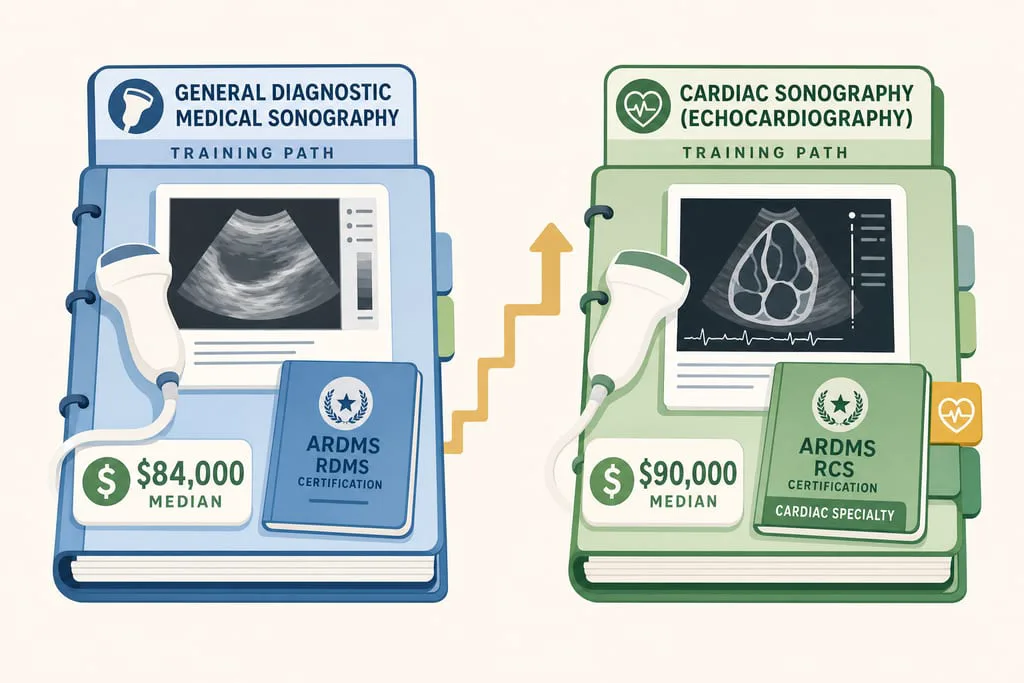
Diagnostic medical sonographers earn a median wage around $84,000 a year, according to the latest BLS figures, while cardiac sonographers who focus on echocardiography often land closer to $90,000 because the imaging is more specialized and harder to staff. That gap is the first thing to weigh when you pick a specialty track.
The Bureau of Labor Statistics projects sonography job growth around 10 percent through the next decade, faster than most allied health roles. Hospitals and outpatient imaging centers are driving most of that demand, especially for techs who can cover vascular or cardiac studies on top of general abdominal and OB scans.
Credentialing bodies differ on program length and what new grads typically earn right out of school, so it helps to see them side by side.
| Credential Body | Typical Program Length | Average Starting Pay |
|---|---|---|
| ARDMS | 20-24 months, associate track | $68,000 |
| CCI | 18-22 months, certificate or associate | $70,000 |
| Bachelor's-level program (ARDMS or CCI) | 4 years | $75,000 |
A longer bachelor's track costs more time upfront but tends to open doors to cardiac and vascular specialties faster. For a breakdown of how program length and clinical hours stack up by school, this overview of sonography training paths is a useful reference point.
Pick a Path That Matches Your Current Background
Your starting point decides which door to walk through. Someone with no clinical background typically goes the associate degree route, which runs about 20 to 24 months and includes the hands-on scanning hours registries require. A bachelor's degree takes closer to four years but positions grads for lead tech or department supervisor roles sooner, since many hospitals prefer a four-year credential for those openings.
If you're already a radiologic tech, respiratory therapist, or nurse, a bridge program can cut your timeline because your clinical hours and patient care coursework often transfer. These programs assume you already know how to work a hospital floor, so they focus almost entirely on scanning technique and registry prep.
- No healthcare background: associate degree, 20-24 months
- Want supervisory track: bachelor's degree, about 4 years
- Already a tech, RT, or RN: bridge program, often under 18 months
- Any path: confirm CAAHEP accreditation before enrolling
Skip a non-accredited program and you may finish school unable to sit for the ARDMS or CCI exam at all, since both registries require CAAHEP-approved coursework for most applicants.
Get Through Clinical Rotations Without Losing Momentum
Clinical rotations are where you log the scanning hours your registry application requires, and most programs split them across abdominal, OB/GYN, vascular, and cardiac tracks. Expect somewhere between 1,500 and 2,000 total hours depending on your program and specialty mix, with each track requiring a set number of documented, supervised scans.
Programs place students at hospitals, outpatient imaging centers, or clinics based on local partnerships, so your rotation site is rarely your choice. That matters if you're also working part time in a related role like phlebotomy or MA work, since clinical schedules often run daytime hours that conflict with shift work.
- Map your rotation schedule against your work shifts before the term starts
- Ask your program coordinator which specialty tracks run back to back
- Track your scan counts weekly, not at the end of the semester
- Keep a BLS card current, since most clinical sites require it on day one
Scanning hours, not GPA, are what registries check when you apply to sit for an exam, so a strong transcript with weak hands-on hours still won't clear you for testing.
Choose the Right Credential for Your Specialty
Your credential depends on which body covers your specialty, and the two that matter are ARDMS and CCI. ARDMS issues exams in abdomen, OB/GYN, breast, and vascular technology, while CCI handles cardiac and vascular sonography through credentials like RCS and RVS.
Most employers only require one or two specialty credentials to hire you, even if a program trains you broadly across several. Decide early which specialty has the stronger local job market, since chasing every available exam costs both time and money without much return.
- ARDMS: abdomen, OB/GYN, breast, vascular (SPI exam plus specialty exam)
- CCI: RCS for adult echocardiography, RVS for vascular studies
- Most employers ask for one primary credential, not all of them
- Each exam attempt runs roughly $200 to $300, with retake fees if you don't pass
Budget for at least one retake when planning exam costs, since first-attempt pass rates vary by specialty and a failed attempt still costs a full fee to retake.
Land Your First Sonographer Job Faster
New-grad friendly postings usually say "new grad welcome" or list a training track instead of demanding two years of experience outright. Postings that require ARDMS or RDMS registration on day one, with no training period mentioned, typically target experienced hires rather than someone fresh out of clinicals.
Read the pay range, shift pattern, and on-call expectations before you apply, since cardiac and vascular roles often carry on-call rotations that general abdominal scanning does not. Some employers will sponsor your registry exam fee or offer a structured new-grad track that pairs you with a lead sonographer for your first several months.
- Search postings that mention "new grad" or "training provided"
- Check whether on-call is required and how often it rotates
- Ask if the employer covers ARDMS or CCI exam fees
- Compare pay against your specialty, since cardiac roles often pay more
Allied Healthcare Jobs filters openings by Ultrasound Tech and Cardiac Sonographer roles with verified pay ranges and certification requirements listed up front, which saves you from opening a dozen postings just to find the pay.
Sonography vs Rad Tech vs Respiratory Therapy
Pay is the first split between these three paths. A registered sonographer typically out-earns a general radiologic technologist per hour once both hold full credentials, because ultrasound requires more hands-on scanning skill and fewer techs can do it well. Respiratory therapists often sit in between, with pay that depends heavily on whether they work ICU, home care, or float pool shifts.
Training length is the second tradeoff. Sonography runs longer than a phlebotomy or MA certificate but shorter than an RN program, landing most candidates in school and clinicals for 18 to 24 months with a related background. A rad tech associate degree runs close to that same window, while respiratory therapy programs often finish faster at the associate level but cap out lower in specialty pay without further credentialing.
Cardiac sonography is where the real money sits among imaging specialties. Echocardiography techs with an RCS credential consistently out-earn general diagnostic sonographers, rad techs, and most respiratory therapists, because hospitals struggle to staff cardiac imaging and pay accordingly.
The cost is physical. Sonography puts repetitive strain on your wrists and shoulders from holding a transducer at odd angles for long scans, a wear pattern that rad tech and respiratory therapy roles don't carry in the same way. That's worth weighing if you already have joint issues from years of patient transfers or line placements.
| Path | Typical Training Length | Pay Ceiling | Physical Demand |
|---|---|---|---|
| Diagnostic Sonography | 18-24 months | High, cardiac specialty highest | Wrist and shoulder strain |
| Radiologic Technology | 20-24 months | Moderate | Lifting, positioning patients |
| Respiratory Therapy | 18-22 months | Moderate, varies by setting | Physically active, less repetitive strain |
Someone with wrist or shoulder problems from prior clinical work may find respiratory therapy or rad tech work easier on the body long term. Someone chasing the highest hourly ceiling in imaging, and willing to manage the physical wear, is better matched to cardiac sonography.
Pick a Program and Confirm What Local Employers Actually Want
Call or check the website of any sonography program you're considering and ask one question: is it CAAHEP-accredited. If the answer isn't a clear yes, keep looking, since a non-accredited program can leave you unable to sit for ARDMS or CCI exams. Before you lock in a specialty, pull up a handful of postings in your city for both Ultrasound Tech and Cardiac Sonographer roles. Allied Healthcare Jobs lists these with pay ranges and the specific registry each employer requires, so you can see whether local hospitals are asking for RDMS, RVS, or RCS before you pay for coursework built around a credential nobody nearby is hiring for.
Becoming a Sonographer Questions
Can I become a sonographer while still working full-time as a medical assistant or phlebotomist?
Most people in bridge or associate programs keep working, but not full-time at the same hours. Clinical rotations run daytime shifts, so you'll likely need to drop to part-time or pick up overnight or weekend shifts at your current job during the 18 to 24 month stretch. Talk to your program coordinator before enrolling so you know the rotation schedule in advance.
Do I need to pick a specialty like cardiac or vascular before I start school?
No, most programs train you broadly across abdominal, OB, vascular, and sometimes cardiac before you choose a registry exam. You commit to a specialty when you decide which ARDMS or CCI exam to sit for, usually near the end of your clinical hours. Waiting lets you see which track you scanned best in and which local hospitals are actually hiring.
What happens if my program isn't CAAHEP accredited?
You likely won't qualify to sit for the ARDMS or CCI registry exam, since both bodies require CAAHEP-approved coursework for most applicants. A diploma from a non-accredited program can leave you with debt and no path to credentialing. Confirm accreditation directly with the program before you pay a dime in tuition.
Is sonography a realistic second career for someone over 40 switching from another allied health role?
Yes, age isn't a barrier, and your years of patient care experience actually shorten your path through a bridge program. The bigger factor is physical readiness, since scanning involves repetitive wrist and shoulder strain during long exams. If you're coming from a role with existing joint wear, ask clinical sites about ergonomic equipment before committing to the specialty.