What Does a Respiratory Therapist Do
What does a respiratory therapist do daily? See duties, patients, settings, and pay before you apply to open RT roles.
By David Nix
Published
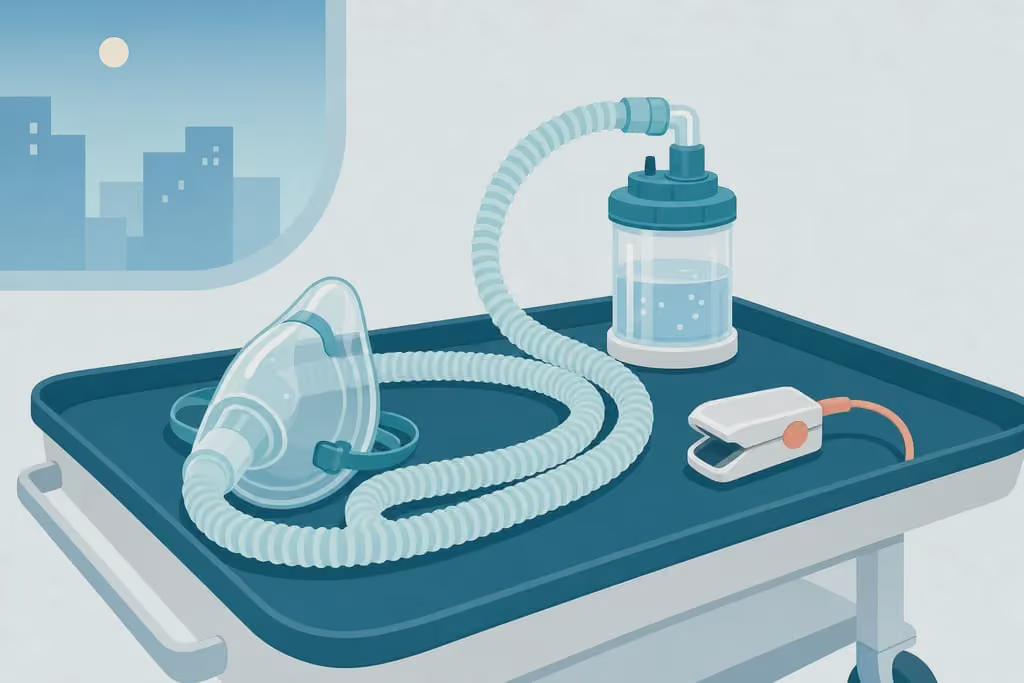
What does a respiratory therapist do: they assess and treat breathing problems, using tools like ventilators, nebulizers, and oxygen equipment to help patients get air in and out of their lungs. They work with patients from newborns in the NICU to elderly patients on hospice care, and you can find them in nearly every department of a hospital, from the ER to the ICU to the operating room. A respiratory therapist might be adjusting a ventilator setting for a preemie at 2 a.m. and running a breathing treatment for a COPD patient by 2:30.
Hospitals page respiratory therapists for codes more than almost any other allied health role, since breathing problems turn critical fast and someone has to manage the airway while the rest of the team works the rest of the problem. A cardiac arrest, a severe asthma attack, a drowning case, a car accident with chest trauma, these all bring an RT to the bedside within minutes. Some RTs describe their pager going off a dozen times in a single 12 hour shift. The rest of this piece breaks down what a normal day looks like, where RTs work, what certifications the job requires, and what the pay range tends to be across different settings.
Table of Contents
Where Respiratory Therapists Fit on the Care Team
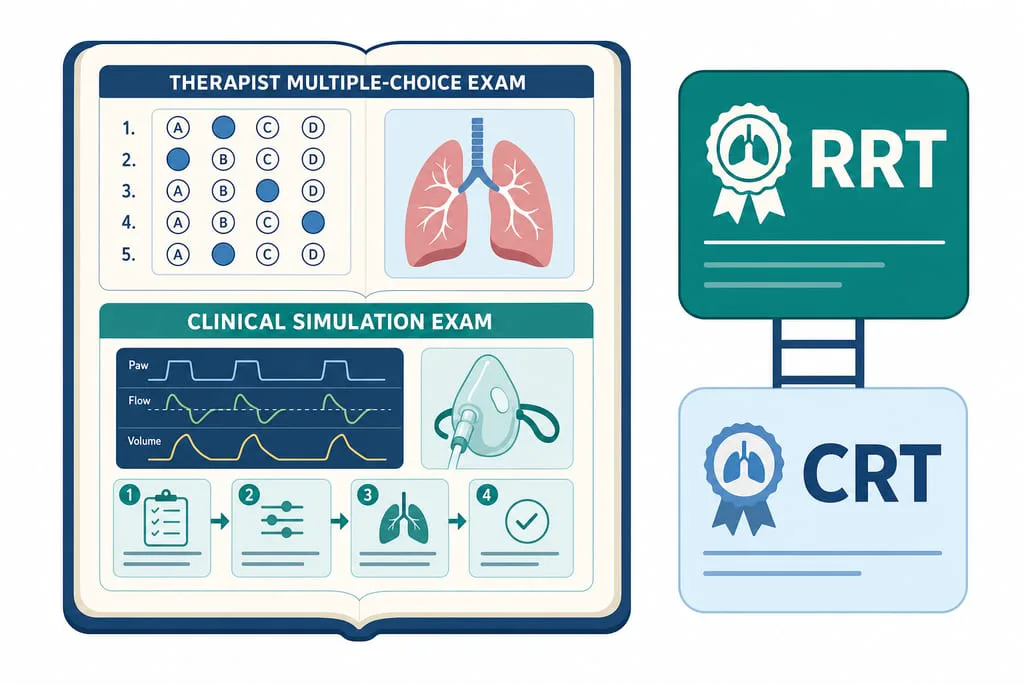
RRT stands for Registered Respiratory Therapist, the credential earned after passing both the Therapist Multiple-Choice exam and the Clinical Simulation exam through the National Board for Respiratory Care. CRT, or Certified Respiratory Therapist, is the entry credential earned by passing only the first exam. Most hospitals now hire almost exclusively RRTs, since CRT-only roles have shrunk as facilities push for the higher credential.
Nurses and EMTs both touch airway care, but their training and scope stop well short of an RT's. A nurse can suction an airway or give a breathing treatment ordered by a physician, but managing ventilator settings, running blood gas analysis, and titrating oxygen therapy belong to respiratory therapy. EMTs and paramedics handle airway management in the field, intubating and bagging patients before handoff, but once a patient reaches the hospital, an RT typically takes over ventilator management and ongoing lung therapy.
| Role | Airway scope | Typical setting | Typical pay |
|---|---|---|---|
| Respiratory Therapist (RRT) | Ventilator management, blood gases, lung therapy | Hospital, clinic, home care | $55k-$75k/yr |
| Registered Nurse | Orders-based breathing treatments, suctioning | Hospital floor, ICU, clinic | $70k-$90k/yr |
| Paramedic | Field intubation, bag-valve-mask ventilation | Ambulance, pre-hospital | $45k-$58k/yr |
Outpatient respiratory care is also growing, with therapists managing COPD patients between hospital visits to cut down on flare-ups, as UC Davis Health describes in its outpatient respiratory therapy program.
Daily Tasks on an RT Shift
A respiratory therapist's shift starts with rounds, checking lung sounds, oxygen saturation, and vitals on every patient assigned to them. On a busy medical-surgical floor that can mean 10 to 15 patients before lunch, each one needing a fresh read on how their breathing changed overnight.
Ventilator management takes up a big chunk of the day. An RT sets tidal volume, respiratory rate, and oxygen percentage on a vent, then checks those settings every few hours against blood gas results, adjusting as the patient's lungs improve or get worse. CPAP and BiPAP machines get the same attention for patients who aren't intubated but still need pressure support to keep their airways open at night or during a flare-up.
Breathing treatments fill the gaps between vent checks. An RT might run a nebulizer for an asthma patient, hand off a metered-dose inhaler with coaching on technique, or set up chest physiotherapy to loosen mucus after surgery.
- Lung sound and oxygen checks during rounds
- Ventilator and CPAP/BiPAP setting adjustments
- Nebulizer and inhaler treatments
- Code blue response and intubation
Code blue calls can come at any point in the shift, and that's when an RT bags a patient or intubates while the rest of the team pushes meds and runs compressions. Hospitals page RTs for nearly every code involving breathing, which means the job never fully slows down even during a quiet stretch.
Patients an RT Treats Most Often
Respiratory therapists see patients across the entire age range, from newborns to people in their nineties. In the NICU, an RT gives surfactant to a premature infant whose lungs haven't finished developing, then monitors oxygen levels through tiny nasal cannulas built for babies under five pounds.
COPD and asthma patients make up a large share of the caseload, especially during flare-ups when inflammation closes the airways faster than medication can open them back up. Post-surgical patients need lung therapy too, since shallow breathing after anesthesia raises the risk of pneumonia, so an RT runs incentive spirometry and chest physiotherapy to keep the lungs expanding fully.
- Premature infants needing surfactant or oxygen support
- COPD and asthma patients during flare-ups
- Post-surgical patients at risk for pneumonia
- Acute respiratory failure from pneumonia or COVID
Acute respiratory failure cases, whether from pneumonia, COVID, or sepsis, bring the most urgent work. These patients can go from stable to needing a ventilator within hours, and an RT is usually the first one to catch the warning signs on a blood gas or oxygen reading.
Work Settings Beyond the Hospital Floor
Most RTs start in a hospital, but the job stretches well past the ICU and ER. Medical-surgical floors need RTs for routine breathing treatments, while home health agencies send therapists into patients' houses to manage ventilators for people who can't be weaned off one.
Sleep labs are another common setting, where an RT hooks a patient up to monitoring equipment overnight and reads the results for signs of sleep apnea. Skilled nursing facilities and long-term care centers also hire RTs, often for patients recovering from a long hospital stay who still need oxygen support or a vent weaning plan.
- Hospital floors, ICU, and ER
- Home health visits for ventilator-dependent patients
- Sleep labs running overnight studies
- Transport teams and skilled nursing facilities
Transport teams add another layer, moving critically ill patients between hospitals by ground or air while keeping a vent running the whole way. RT work spans at least five distinct settings outside a hospital bed, which gives the credential more flexibility than many people expect going in.
Pay, Shifts, and Credentials You Need
An RRT credential plus state licensure is the baseline for almost every RT job posted today. Getting there means passing the Therapist Multiple-Choice exam and the Clinical Simulation exam through the National Board for Respiratory Care, the same path covered earlier for how RTs fit on the care team.
Shifts usually run 12 hours, with weekend rotation built into most hospital schedules and on-call expectations for nights when staffing runs thin. Per diem roles pay by the hour with more schedule flexibility, while full-time roles come with benefits but less control over which shifts land on your calendar.
| Employment type | Typical pay | Shift pattern |
|---|---|---|
| Per diem | $55/hr | Flexible, fills gaps |
| Float pool | $55/hr | 12-hour, rotates units |
| Full-time | $55k-$75k/yr | 12-hour, set schedule |
A listing like a Registered Respiratory Therapist float pool role in Annapolis, Maryland, posted at $55/hr per diem, shows how per diem pay can match or beat a salaried full-time rate once you account for hourly flexibility. Checking listings on a board built for allied health roles makes it easier to compare those pay structures side by side instead of digging through generic job sites one posting at a time.
Who Should Choose Respiratory Therapy Over a Related Role
RT work fits people who want to manage a crisis with their hands, not just document one. If you like the idea of running a ventilator during a code instead of charting vitals or drawing tubes, that pull toward airway management is the real signal, and it gets you there in two years of school instead of the four-plus years a nursing degree takes.
Pace is the biggest difference between RT and roles like lab tech or medical assistant. A lab tech runs samples on a schedule that rarely changes minute to minute, and an MA's day moves through rooming patients and prepping charts at a steady clip. An RT's day swings between routine rounds and a code call that pulls them out of a nebulizer treatment with no warning, so the stress is less constant but spikes harder.
| Role | Typical pace | Crisis frequency |
|---|---|---|
| Lab Tech | Steady, batch-based | Rare |
| Medical Assistant | Steady, patient-to-patient | Occasional |
| Respiratory Therapist | Steady with sudden spikes | Multiple per shift |
Listings on Allied Healthcare Jobs show the RRT requirement and the pay rate in the same line, like the float pool role in Annapolis posted at $55/hr per diem. That upfront pairing saves a step most boards skip, since you're not opening five postings just to find out one wants a CRT and another wants three years of ICU time.
Before applying, check the shift pattern and whether the posting calls for on-call hours, since a 12-hour rotating schedule with weekend coverage is a different commitment than a set day shift. A posting that lists certification, scope, and pay together is worth more of your time than one that makes you dig for all three.
Checking If the Pay and Schedule Fit Before You Enroll
Before you sign up for an RT program, spend twenty minutes looking at real postings instead of program brochures. Pull up a handful of current openings and check the pay, the shift pattern, and the setting against what you read here. A per diem role paying $55/hr and a full-time role at $55k-$75k/yr can both show up in the same city, and only a real posting tells you which one is hiring right now. Allied Healthcare Jobs lists verified RT openings with the credential, pay, and setting listed together, so you can compare a hospital float pool slot against a sleep lab or home health role in one sitting. Look at three or four listings today, not just the job description pages schools hand out during admissions.
Common Questions About RT Careers
Can you become a respiratory therapist without a four-year degree?
Yes, most RT programs are two-year associate degrees, not four-year programs. You take anatomy, pharmacology, and clinical rotations, then sit for the national exams to earn your credential. Some schools offer a bachelor's track for therapists who want to move into management or education later, but it isn't required to work the floor.
Do respiratory therapists get floated to departments outside their training?
Yes, float pool positions move RTs between units like ICU, ER, and med-surg within the same shift. Your airway skills transfer across departments since vent management and breathing treatments work the same way regardless of which floor you're on. A hospital short-staffed in the ICU might pull an RT from a sleep lab shift to cover, so ask during an interview how often floating happens at that facility.
Is respiratory therapy a physically dangerous job compared to other allied health roles?
RT work carries more exposure risk than desk-based allied health roles, since you're close to a patient's airway during intubation, suctioning, and nebulizer treatments. That puts you near respiratory droplets more often than a lab tech or medical administrative assistant. Hospitals require fit-tested N95 masks and other protective gear for airway procedures, and following those protocols is what keeps the risk manageable.
Can a respiratory therapist pick up travel contracts like travel nurses do?
Yes, travel RT contracts exist and usually run 13 weeks with housing stipends similar to travel nursing packages. Hospitals use them to cover gaps during flu season or staffing shortages, and the pay often beats a local full-time rate once stipends are added in. Allied Healthcare Jobs lists travel contract details alongside per diem and full-time postings, so you can compare all three pay structures for the same role before deciding which one fits your schedule.